Tuesday, October 25, 2011

Making visible

THIS from the October 23, 2011 Mpls Strib, an op-ed about poverty and children.  I could not get access to the article she mentions in which there are photos of kids in designer clothes.  She attempts to counter those images of children whose middle-class parents spent significant money on their soon-to-be-outgrown "luxe" outfits with statistics about the increasing number of Twin Cities kids whose parents' income is so low that they qualify for free lunch (35%) and others numbers about the dire situation of children living in poverty whom the rest of us are unlikely to notice.  She suggests that we are unlike to notice them because our daily lives do not intersect: we live and move in different parts of the city.  And, we don't notice them because the media we do see shows us those other kids in fancy, expensive clothing.

We talked about this in class from a couple of angles:
1) How does the situation she describes compare to that documented by Jacob Riis' photos and Hull House reports?

2) How effective is her op-ed in comparison to Riis' photos and Hull House reports?

A very important response to the first required us to move beyond the easy generalization that "the poor you have with you always."  We needed to consider both the degree of economic stratification in the USA at a given time and the actual conditions in which children in those various "classes" lived.  A parallel can be drawn to statistics about literacy.  In that case we must ask both what constitutes literacy and how many people achieve it.  What counted a century and a half ago would not count as literacy today. And today we'd probably need to add consideration of access to information technology to assessment of the ability to read.

Our response to the second seemed, at first, to assume that visibility is necessary if the general public is to respond to the situation of the poor.  We noted that a person or group of people can be invisible because there is no portrayal of their situation or because that portrayal is lost in the blizzard of information.  A variation on the second is that the viewer becomes numb to the images.  The Hull House strategy included both providing decision makers with many reports with many facts and taking up residence in those "congested areas."  At its best this strategy encouraged the residents to consider real people who were neither reduced to aggregated statistics nor to two-dimensional images.  Thus their neighbors were both visible and known in 3-dimensions.

Sunday, October 23, 2011

Out in Chicago: History Museum Exhibit

Link to exhibit


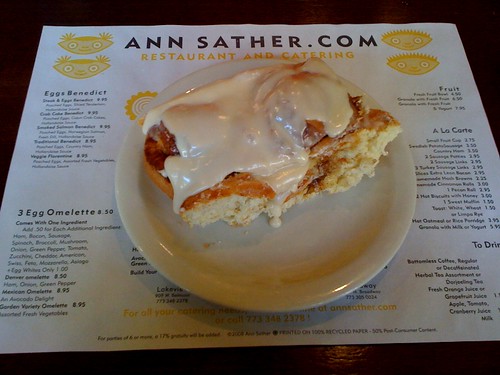
After our reading of Gay New York this exhibit from the Chicago History Museum is of interest now that we're concentrating on that midwestern City.  The linked page includes photos of some items in the exhibit, both historical and contemporary.  These recall themes we have encountered before.  There is a photo from Bronzeville, Chicago's African-American neighborhood on the near southside, recalling the intersection of New York's "gay world" and Harlem.  The page also notes events including a walking tour of the Andersonville neighborhood, home to Ann Sather's Scandinavian restaurant and Women and Children First, a venerable feminist bookstore.  The first is a legacy of the neighborhood's history as a Scandinavian immigrant community; likely the second signals the influx of lesbian residents in the 1980s.

photographic past poem

In the Olden Days

The world held no color but sepia.
Our bedside tables creaked beneath the weight
of daily hardships, buffered only by doilies.
We did without, did things by hand. We got more
snow. Our Mickey Mouse was far from cute.
We specialized in quaint and quirky phrases
like "23 Skidoo." Our songs rang dark
with forced joy and naiveté: "Aint We Got Fun?"
Staring from family photographs, we look
older than we are. Even as children, our faces
are shadowed with doubt and parental disappointment,
as if to say to those looking years from now:
We persist. We persevere. We do this for you.

"In the Olden Days" by Richard Newman, from Borrowed Towns. © Word Press, 2005. 


After looking at those Jacob Riis photos on Friday, I was struck by this poem's suggestion that the people in photos speak from their time to contemporary viewers.  And I wished that our exercise had been slightly different.  Instead of writing captions for the photos we might have written speeches for the people in them: 1) what would this child holding the baby have said to Riis's viewers and 2) what does she say to us.


Friday, October 21, 2011

more on tableware


Once more about the tools for eating and what they reveal about values and customs. This time we consider the flatware of the the early 20th century.


If 'everyone' can own a fork or two, then how will the elite demonstrate their refinement?  Multiply the kinds of forks and knives and spoons.  That increases the cost of owning a full set.  It requires a larger table to set a larger, more elaborate meal to eat from it with the utensils, and introduces special knowledge about which utensil to use to each each dish.  Thus, even if I have enough money to buy all those pieces and a cook to plan and prepare the meal, I still could betray my non-elite origins by eating my fish with a dessert fork.

on the joys and aches of global perspective

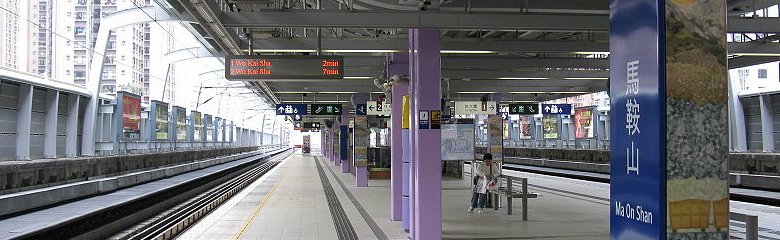
THIS lovely reflection from Monte Smith (Paracollege, 2000) about coming "home" from Hong Kong and how she feels about being here while also not being there.  She reminds me that our happy encouragement of global perspective is only part of the story.  Opening one's heart up to the world includes being open to its sorrows and to the smaller sadness of always being divided between where one is and the place and people who are elsewhere.